SWGDAM Validation Requirements for New Forensic DNA Software
A Practical Overview
SWGDAM (the Scientific Working Group on DNA Analysis Methods) does not certify, approve, or endorse specific forensic DNA software products.
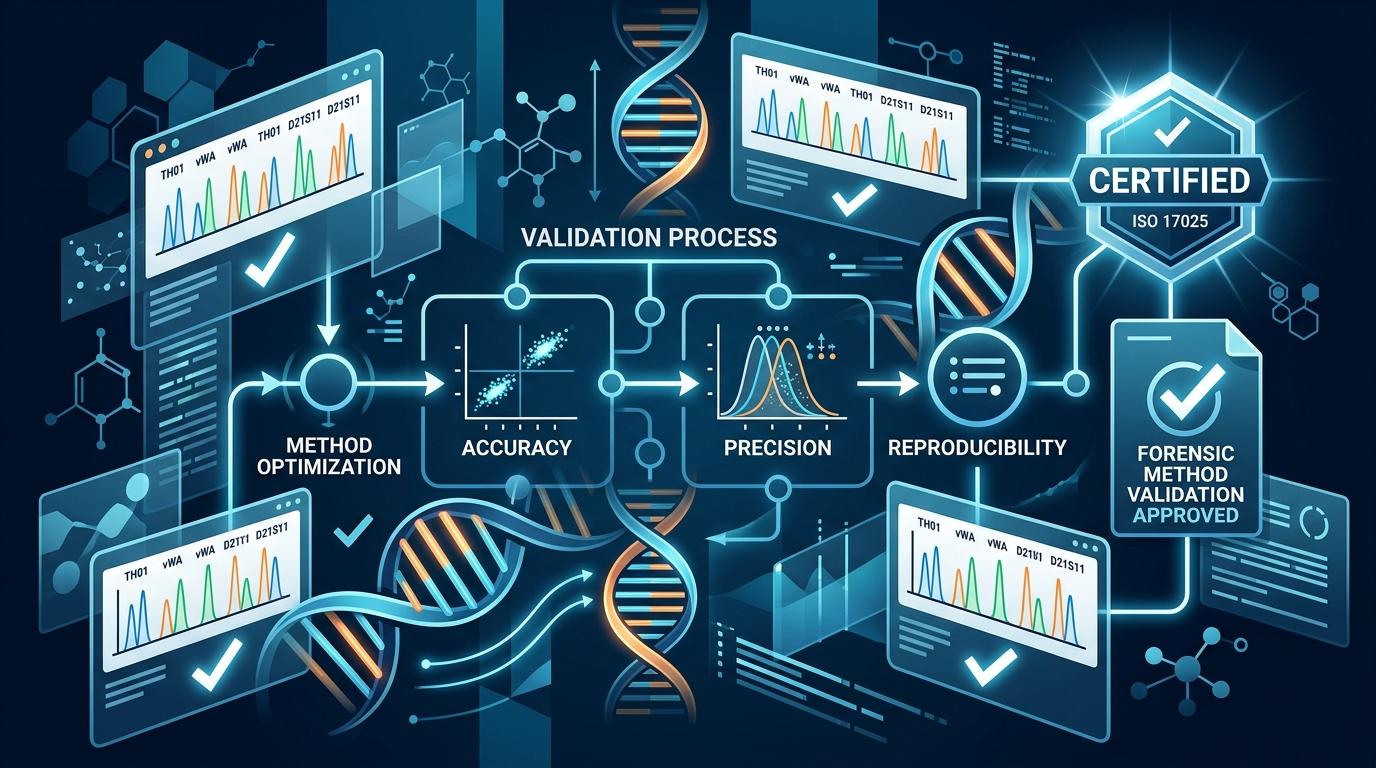
Instead, SWGDAM publishes interpretation and validation guidelines that each accredited laboratory is expected to use to conduct its own internal validation study before adopting any new software or methodology for casework.
Who Is SWGDAM, and What Authority Does It Have?
SWGDAM is a group of forensic DNA scientists that develops consensus recommendations on DNA analysis methods, used widely across U.S. forensic laboratories and referenced internationally. It does not operate as a certifying or licensing body for commercial software — there is no "SWGDAM-approved" product list. What SWGDAM does provide is a documented framework for what a laboratory's own validation process should cover.
What an Internal Validation Study Actually Requires
Before a laboratory can rely on new DNA analysis software for real casework, it typically needs to conduct and document its own validation study covering:
- Known-sample testing: running samples with previously established, known results through the new software to confirm concordant output.
- Sensitivity and specificity: confirming the software correctly identifies true matches and correctly excludes non-matches across a representative range of sample types.
- Reproducibility: confirming the software produces consistent results when the same data is processed multiple times.
- Edge-case and boundary testing: mixtures, degraded profiles, partial profiles, and off-ladder (OL) calls — the scenarios most likely to expose classification errors.
- Documentation: a written validation report, reviewed and approved by the laboratory's technical leadership, retained as part of the lab's quality management system.
Developmental Validation vs. Internal Validation
It's worth distinguishing two related but different concepts. Developmental validation is typically performed by the software's developer, establishing that a method or tool works as intended under controlled test conditions. Internal validation is performed by each individual laboratory, confirming the tool performs correctly within that lab's specific instruments, protocols, population data, and casework conditions. A vendor's developmental validation study is useful supporting evidence, but does not substitute for a laboratory's own internal validation — accreditation bodies expect to see the lab's own study, not just the vendor's.
What to Ask a Software Vendor Before Validation
- Is there a documented developmental validation study available to review?
- Does the software allow lab-specific configuration of thresholds (minimum match percentage, OL cutoffs, mutation models) so results reflect the lab's own validated parameters rather than fixed defaults?
- Does the software produce an audit trail sufficient to reconstruct exactly how a given result was calculated, for later technical review?
- Does the vendor support re-validation when a new software version is released, given that even interface-level changes can affect report generation and should be assessed?
Frequently Asked Questions
Does SWGDAM certify or approve forensic DNA software?
No. SWGDAM publishes interpretation and validation guidelines; it does not certify, approve, or maintain an approved-vendor list for commercial software. Validation is the responsibility of each accredited laboratory.
How long does an internal validation study typically take?
This varies significantly by laboratory and scope, but a thorough internal validation covering known samples, mixtures, and edge cases commonly takes several weeks to a few months, including documentation and technical review.
Does a new software version require re-validation?
Any change that could affect how results are calculated, classified, or reported — not just the core calculation engine — should be assessed for validation impact before being relied on for casework.
AlleleSight is designed with reference to SWGDAM, ISFG, DAB, FBI QAS, ISO 17025, and ISO 21043 frameworks, and supports lab-configurable thresholds so each laboratory's own validated parameters govern every case.
See how AlleleSight supports your lab's validation process